Guava
Psidium guajava
Description
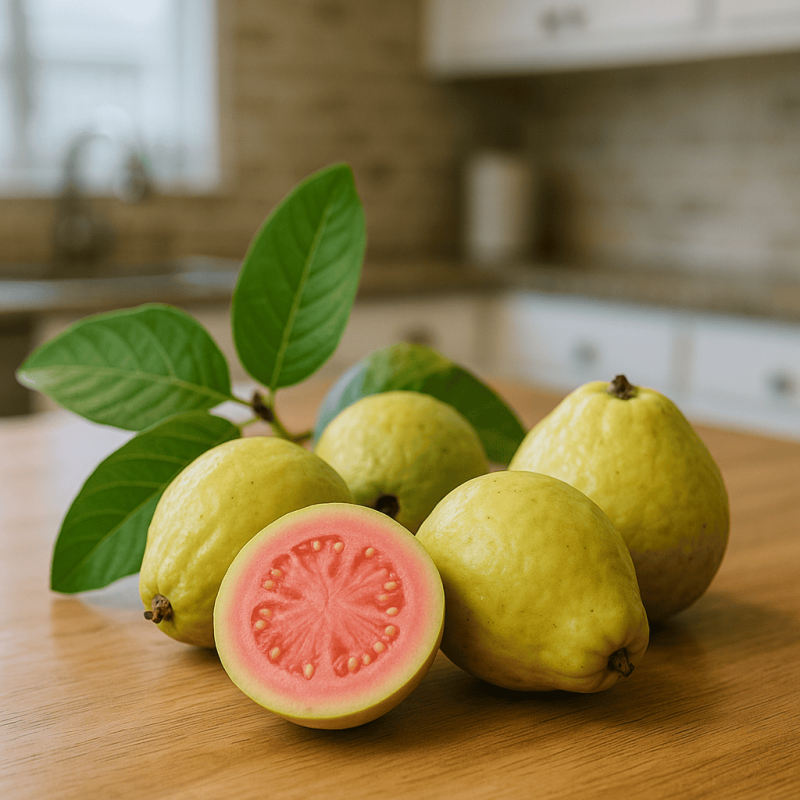
Tropical fruit with sweet aromatic pulp, available in red (pink) and white varieties. The skin is edible and nutrient-rich. The tree is hardy and fruits multiple times a year.
Benefits
Extremely rich in Vitamin C (228.3 mg/100g). Contains lycopene (in red varieties) and potassium. Boosts immunity and skin health.
History and Origins
Guava originated in tropical America, likely Brazil and Peru. It was consumed by indigenous peoples before European arrival. In the 19th century, it became a national staple, famous for "Goiabada" (guava paste).
Fun Facts
Did you know Guava has more Vitamin C than oranges? In Brazil, a classic dessert is "Romeo and Juliet": a slice of guava paste eaten with mild white cheese. Also, locals love eating guavas straight from the tree!
What are the varieties of Guava?
Varieties: Red Guava (sweeter), White Guava (firmer), Paluma (high yield), Pedro Sato (commercial standard), and Purple Guava (rare).
Nutritional Values per 100g of Guava
| Calories | 68 kcal |
|---|---|
| Carbohydrates | 14.3 g |
| Protein | 2.6 g |
| Fat | 0.9 g |
| Fiber | 5.4 g |
| Vitamin C | 228.3 mg |
Harvest Months
Harvest months listed here correspond to the Southern Hemisphere.
Medical Disclaimer: The health benefits of this fruit are provided for educational purposes only and do not substitute for professional medical diagnosis or advice. Read more about our sources.