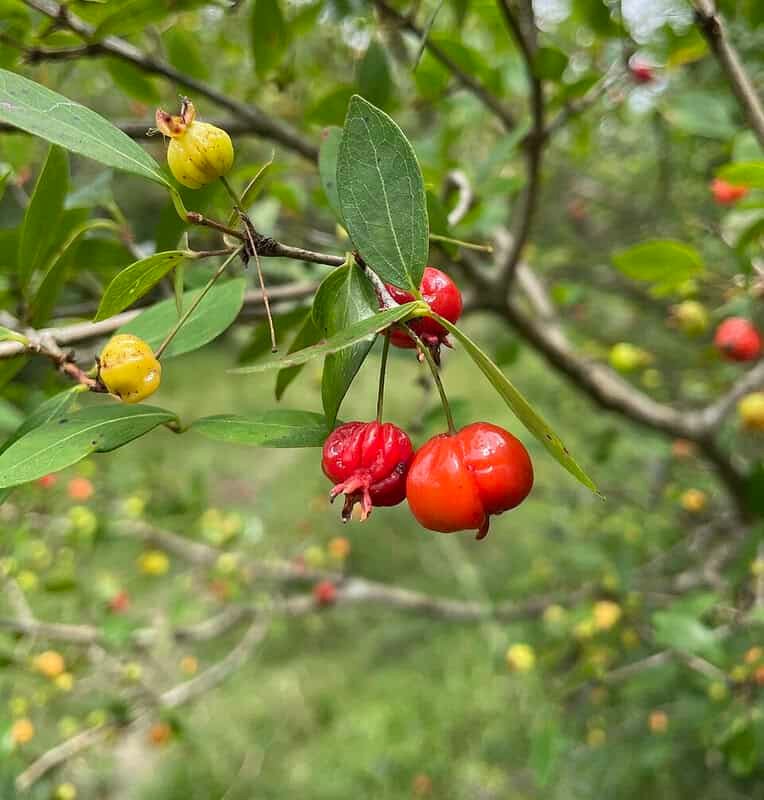
Myrtaceae
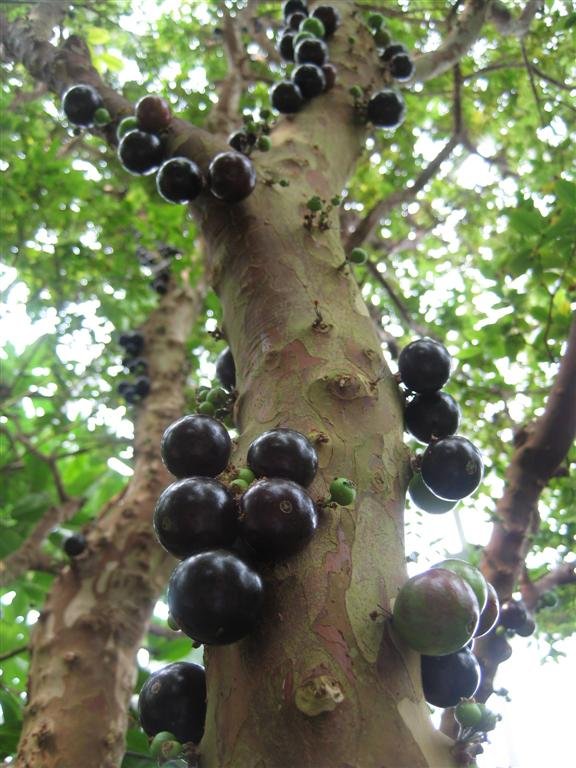
The Myrtaceae family includes many of the best‑known tropical fruits in Brazil and around the world, such as guava, jabuticaba, and pitanga. This botanical family is important because it brings together a large number of fruiting species, many of them native to Brazil and valued for their flavor, aroma, and local use.
Overview
Myrtaceae is a family of trees and shrubs found mainly in tropical and subtropical regions. In Brazil, it is especially rich in native fruit species, many of which are still better known in local markets than in global trade.
In simple terms, this is a family where many fruits are small to medium in size, juicy, and often strongly aromatic. Several species also have fragrant leaves, which is why some plants from this family are easily recognized even before they fruit.
Botanical features
Plants in the Myrtaceae family usually have simple, opposite leaves with tiny oil glands. These glands are responsible for the strong scent often noticed when the leaves are crushed.
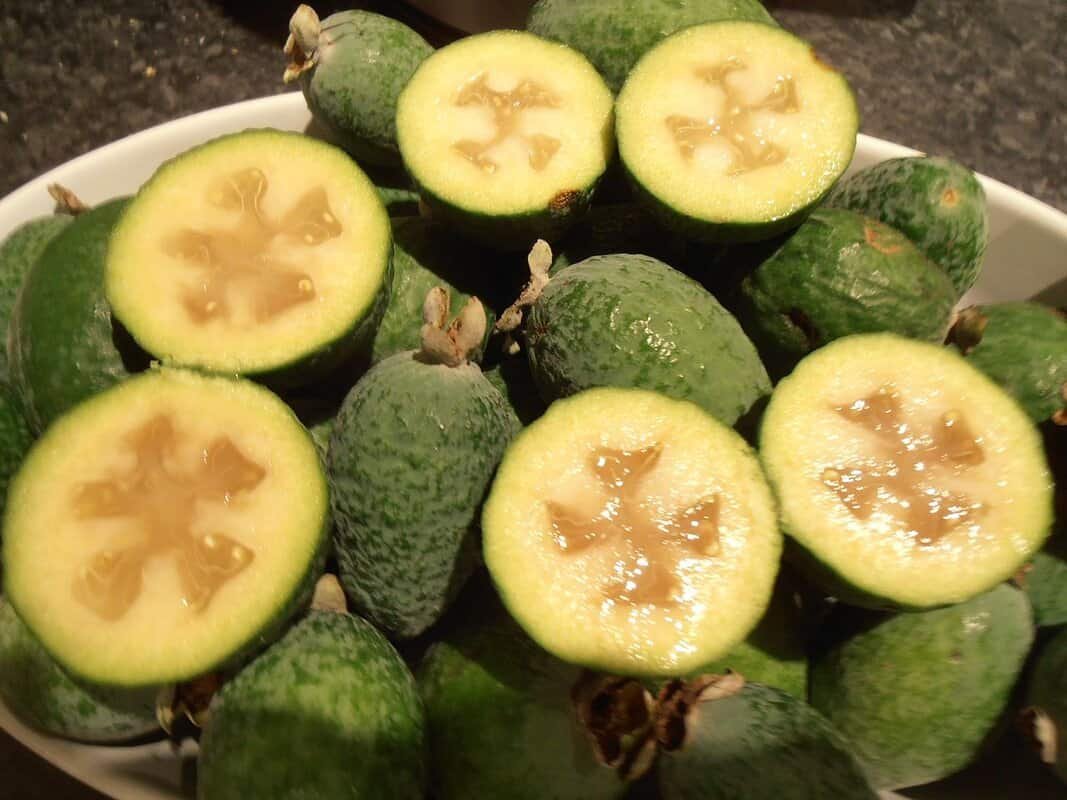
The flowers often have many fine stamens, which give them a full, delicate look. The fruits vary by species, but many are fleshy berries with thin skin and juicy pulp. In some cases, the flavor can be sweet, sour, or slightly astringent, meaning it can leave a dry feeling in the mouth.
Origin and distribution
Myrtaceae has a pantropical distribution, meaning it is found mainly in tropical regions around the world, with some species also living in milder climates. In Brazil, the family is especially diverse and occurs in several biomes, including the Atlantic Forest, Cerrado, and other vegetation types.
This wide presence helps explain why Brazil is such an important center for native fruits from this family. Many species are endemic to the country or strongly associated with Brazilian ecosystems.
Representative fruits
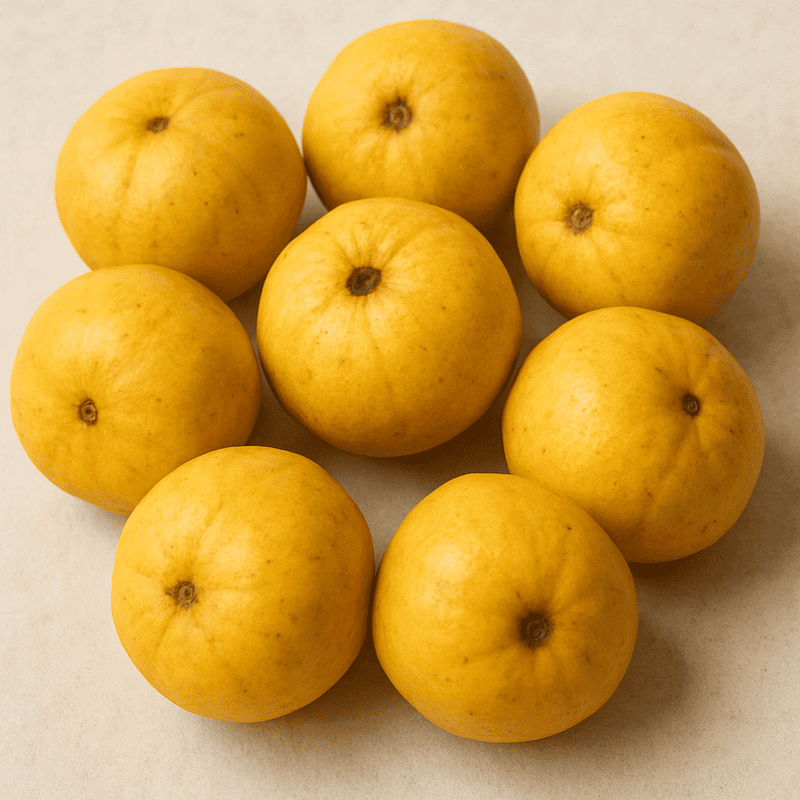
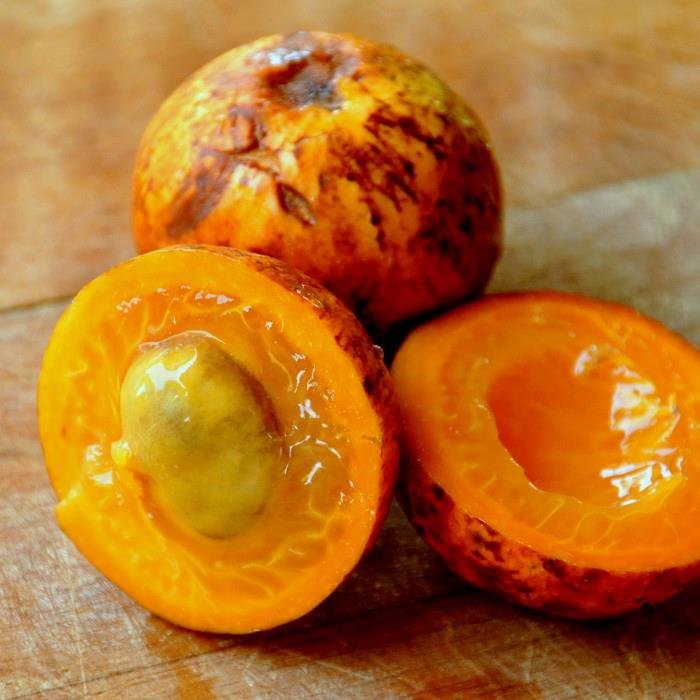
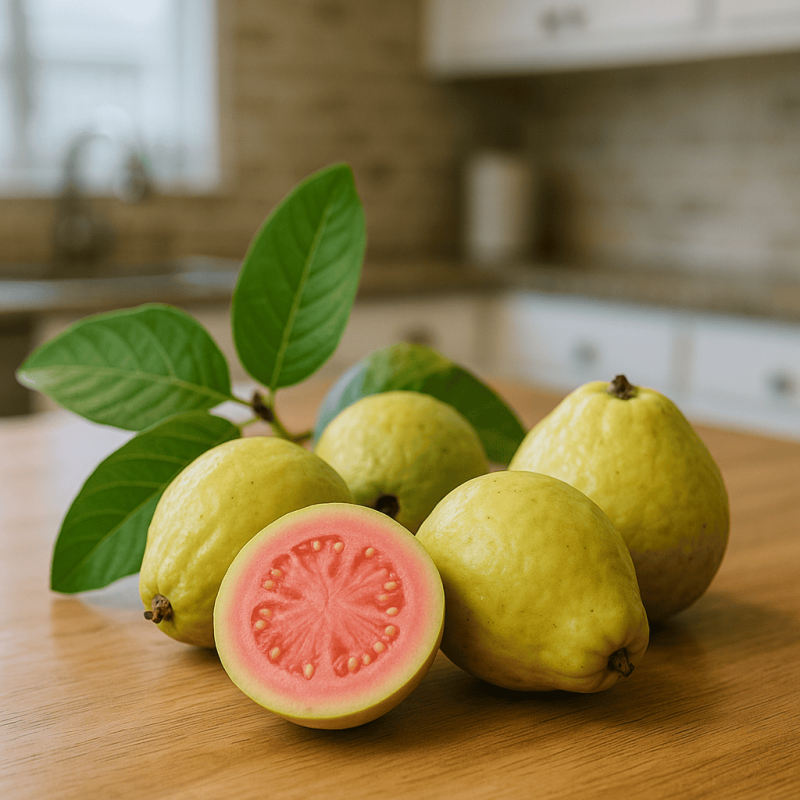
Some of the best‑known fruits from Myrtaceae are **guava**, **jabuticaba**, **pitanga**, and **aráça**. Other Brazilian fruits from this family include **uvaia**, **cambuí**, **cabeludinha**, and **guabiju**, many of them appreciated in regional cuisine and small‑scale farming.
The full list of fruits from this family on Frutopedia appears in the bottom section of the page, where each fruit is shown in a card with a quick link to its own details.
Interesting facts
One of the most striking fruits in this family is jabuticaba, which grows directly on the trunk of the tree instead of only on the branches. This growth pattern is called cauliflory and is one of the traits that makes the species so memorable.
Another interesting point is the strong local importance of many Myrtaceae fruits. They are often eaten fresh, but they are also used in jams, juices, liqueurs, and sweets, which keeps them present in both home cooking and small‑scale production.
Frequently asked questions
1. What is the Myrtaceae family?
It is a botanical family of trees and shrubs, widely known for fruits such as guava, jabuticaba, and pitanga.
2. Are many Myrtaceae fruits native to Brazil?
Yes. Brazil has a very rich diversity of native species in this family, especially in the Atlantic Forest and other tropical regions.
3. Do all Myrtaceae species produce edible fruits?
No. Many do, but some are grown mainly for their aroma, wood, or ornamental value.
4. Why is this family important in Brazil?
Because it contains many native fruit species that are part of local diets, regional markets, and traditional knowledge.