Plum
Prunus domestica
Description
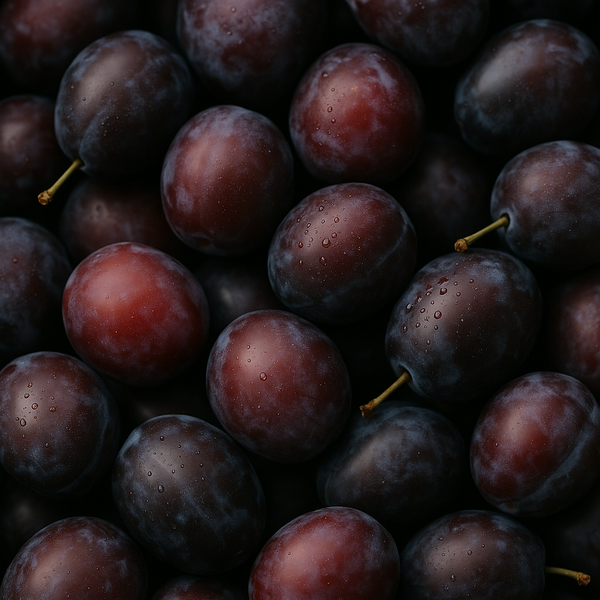
Fruit with juicy pulp, ranging from purple to yellow. Consumed fresh or dried (prunes).
Benefits
High content of sorbitol (natural laxative) and Vitamin K. Improves gut health and blood clotting.
History and Origins
The Plum originated in Asia, particularly China, cultivated for over 2,000 years. Romans spread it to Europe, and from there to the world. It arrived in Brazil with European immigrants in the 19th century.
Fun Facts
Did you know plums come in many colors, even green? And that prunes are simply dried plums? In Japan, the plum blossom is a symbol of perseverance.
What are the varieties of Plum?
Common varieties: Black Plum (sweet, for desserts), Red Plum (more acidic), Yellow Plum (mild flavor), Water Plum (very juicy), and Japanese Plum (large and aromatic).
Nutritional Values per 100g of Plum
| Calories | 46 kcal |
|---|---|
| Carbohydrates | 11.4 g |
| Protein | 0.7 g |
| Fat | 0.3 g |
| Fiber | 1.4 g |
| Vitamin C | 9.5 mg |
Harvest Months
Harvest months listed here correspond to the Southern Hemisphere.
Medical Disclaimer: The health benefits of this fruit are provided for educational purposes only and do not substitute for professional medical diagnosis or advice. Read more about our sources.