Sapodilla
Manilkara zapota

Description
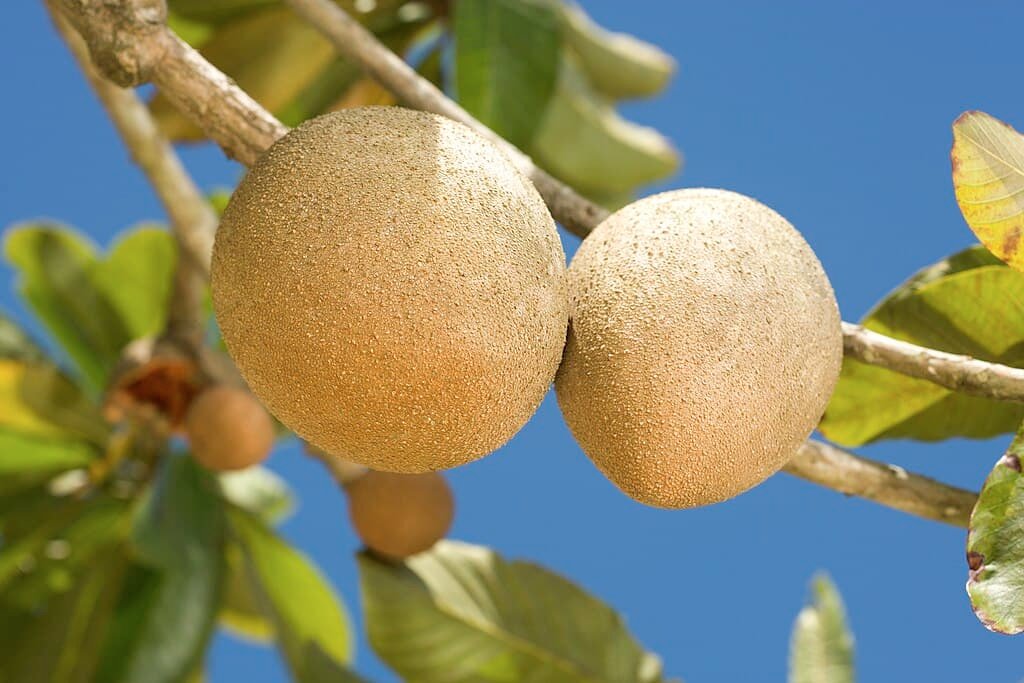
Fruit with brown, sandpaper-like skin and sweet, grainy pulp tasting of brown sugar and pear. The tree yields chicle latex.
Benefits
High in fiber, calcium, and iron. Excellent for digestive health and energy. Contains tannins with antiviral and anti-inflammatory properties.
History and Origins
Sapodilla originated in Central America and Mexico, cultivated by the Mayans and Aztecs. It arrived in Brazil in the 19th century. The tree sap (latex) was the original source of chewing gum (chicle).
Fun Facts
Sapodilla tastes like pear with brown sugar! The tree is extremely long-lived. Historically, "chicle" gatherers (chicleros) tapped the trees in the wild to make gum base.
What are the varieties of Sapodilla?
Varieties: Alano (sweet), Prolific (high yield), Tikal (light pulp), and Brown Sugar.
Nutritional Values per 100g of Sapodilla
| Calories | 83 kcal |
|---|---|
| Carbohydrates | 19.9 g |
| Protein | 0.7 g |
| Fat | 1.1 g |
| Fiber | 5.3 g |
| Vitamin C | 14.7 mg |
Harvest Months
Harvest months listed here correspond to the Southern Hemisphere.
Medical Disclaimer: The health benefits of this fruit are provided for educational purposes only and do not substitute for professional medical diagnosis or advice. Read more about our sources.