Spanish Lime
Melicoccus bijugatus
Description
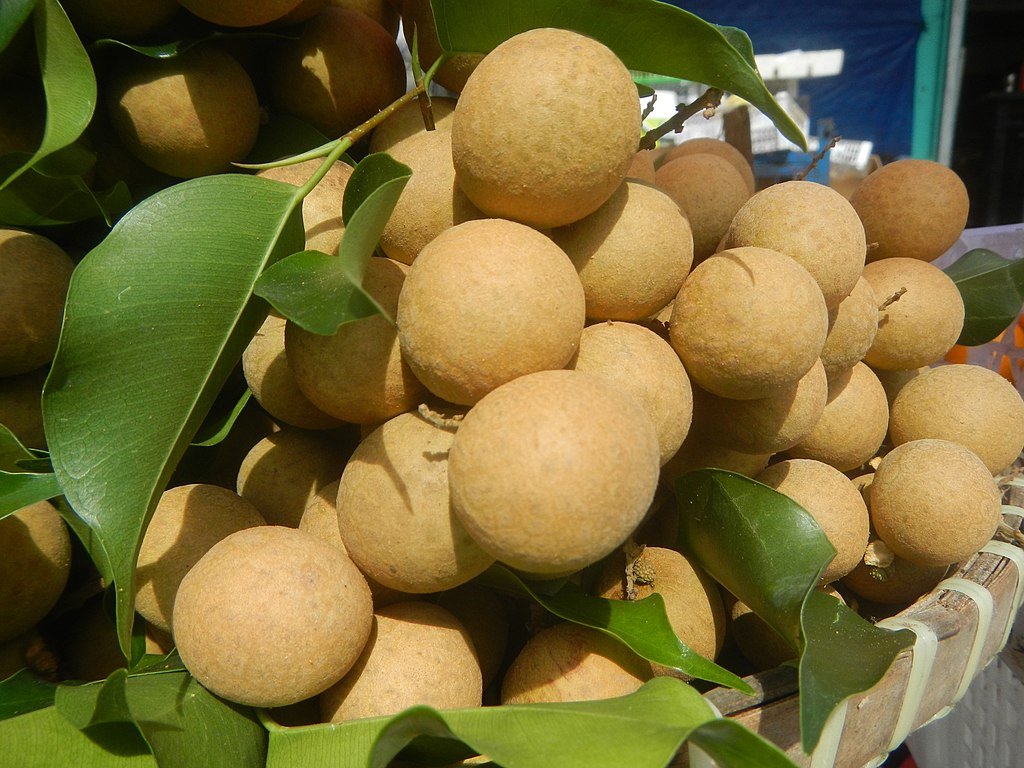
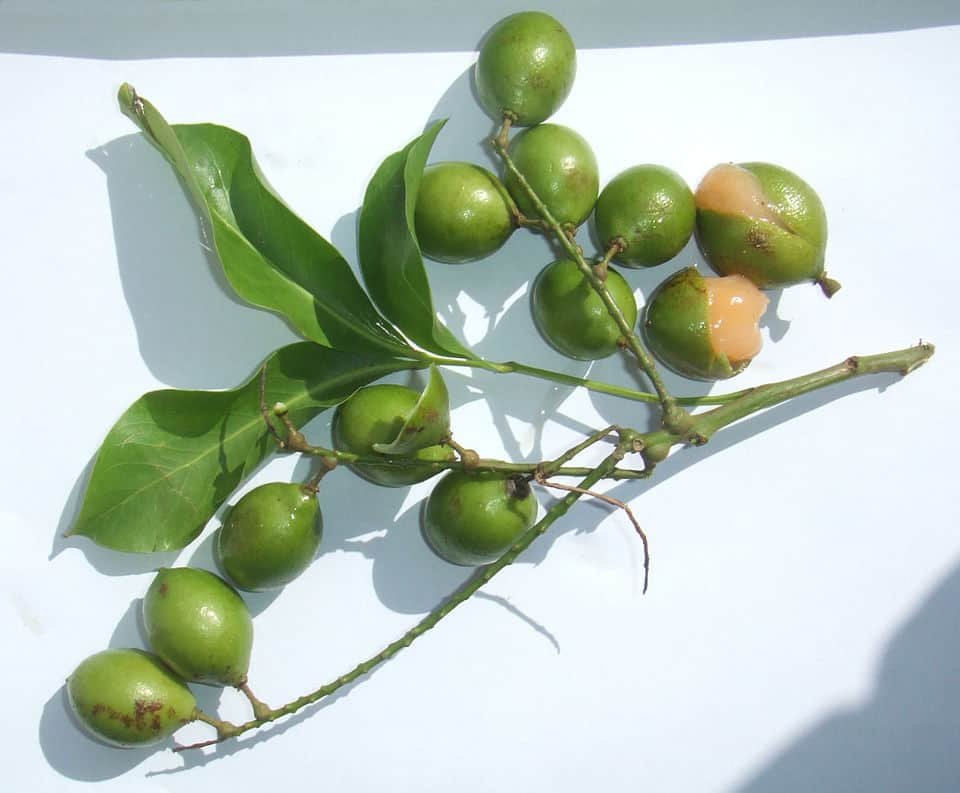
Small fruit with green, leathery skin and salmon-colored, gelatinous pulp. The flavor is tangy-sweet. Popular in the Caribbean and Florida.
Benefits
Contains Vitamin A, fiber, and calcium. Traditionally used to soothe stomach issues and boost the immune system.
History and Origins
Native to northern South America and the Caribbean. It grows wild in coastal areas. It has many names: Quenepa (Puerto Rico), Mamoncillo (Cuba), and Limoncillo. It is a staple summer snack sold by street vendors.
Fun Facts
Warning: The juice leaves a brown stain on clothes that is almost impossible to remove! To eat it, you bite the skin to crack it and suck the pulp off the large seed.
What are the varieties of Spanish Lime?
Varieties vary mostly by sweetness (Sweet vs. Sour types) and pulp-to-seed ratio. "Montgomery" is a known cultivar.
Nutritional Values per 100g of Spanish Lime
| Calories | 73 kcal |
|---|---|
| Carbohydrates | 18.1 g |
| Protein | 1 g |
| Fat | 0.1 g |
| Fiber | 1.6 g |
| Vitamin C | 11 mg |
Harvest Months
Harvest months listed here correspond to the Southern Hemisphere.
Medical Disclaimer: The health benefits of this fruit are provided for educational purposes only and do not substitute for professional medical diagnosis or advice. Read more about our sources.