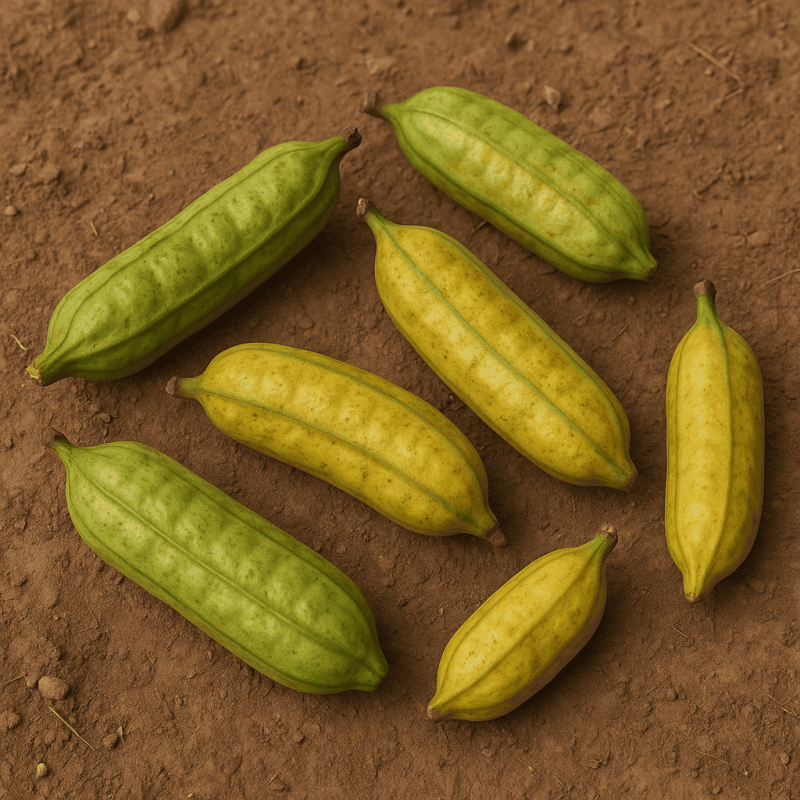
Tamarind
Tamarindus indica

Description
Pod-like fruit with a hard shell and acidic pulp, widely used in juices and seasonings. The tree is drought-resistant.
Benefits
Rich in tartaric acid (antioxidant), potassium (375 mg/100g), and fiber. Aids digestion and blood pressure control.
History and Origins
Tamarind originated in tropical Africa but spread to Asia and Latin America centuries ago. In Brazil, it arrived with Portuguese colonizers and quickly won over palates with its sweet-sour flavor, used in candies, juices, and sauces.
Fun Facts
Tamarind is a secret ingredient in Worcestershire sauce! Also: its pulp is used as a natural digestive remedy and, in some countries, even to polish metals.
What are the varieties of Tamarind?
Varieties: Sweet Tamarind (less acidic, often eaten as a snack), Sour Tamarind (most common for cooking), and commercial hybrids.
Nutritional Values per 100g of Tamarind
| Calories | 239 kcal |
|---|---|
| Carbohydrates | 62.5 g |
| Protein | 2.8 g |
| Fat | 0.6 g |
| Fiber | 5.1 g |
| Vitamin C | 3 mg |
Harvest Months
Harvest months listed here correspond to the Southern Hemisphere.
Medical Disclaimer: The health benefits of this fruit are provided for educational purposes only and do not substitute for professional medical diagnosis or advice. Read more about our sources.