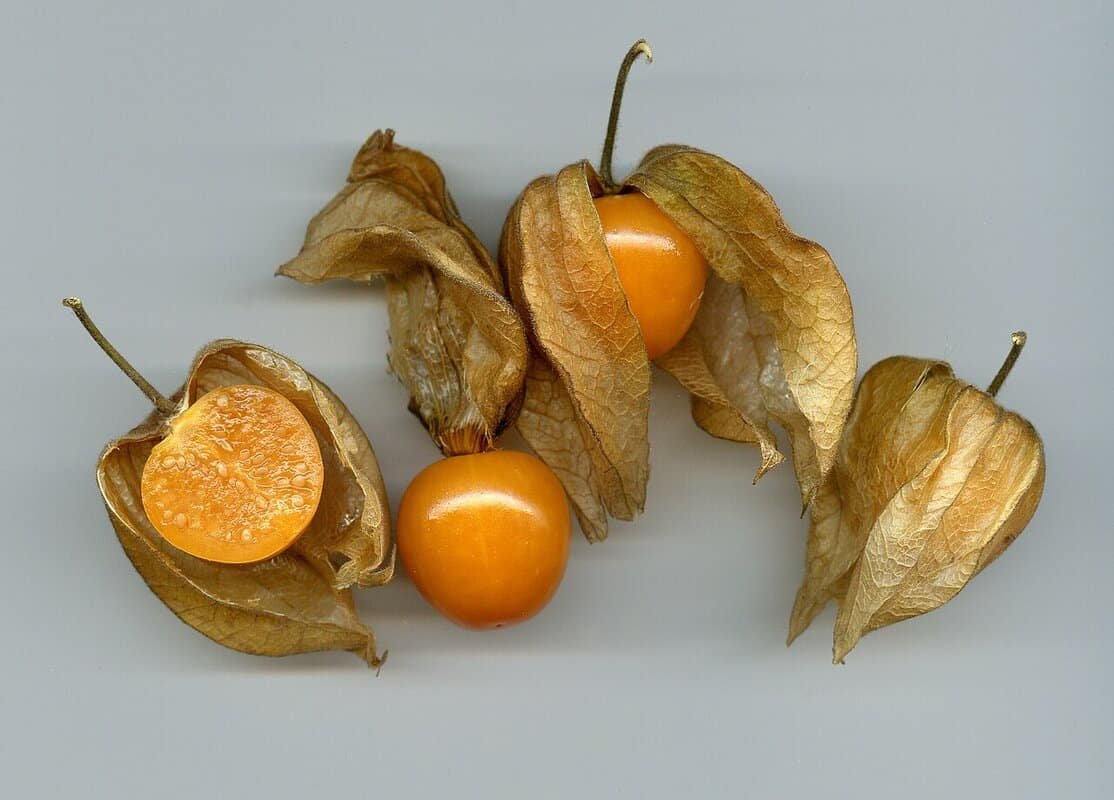
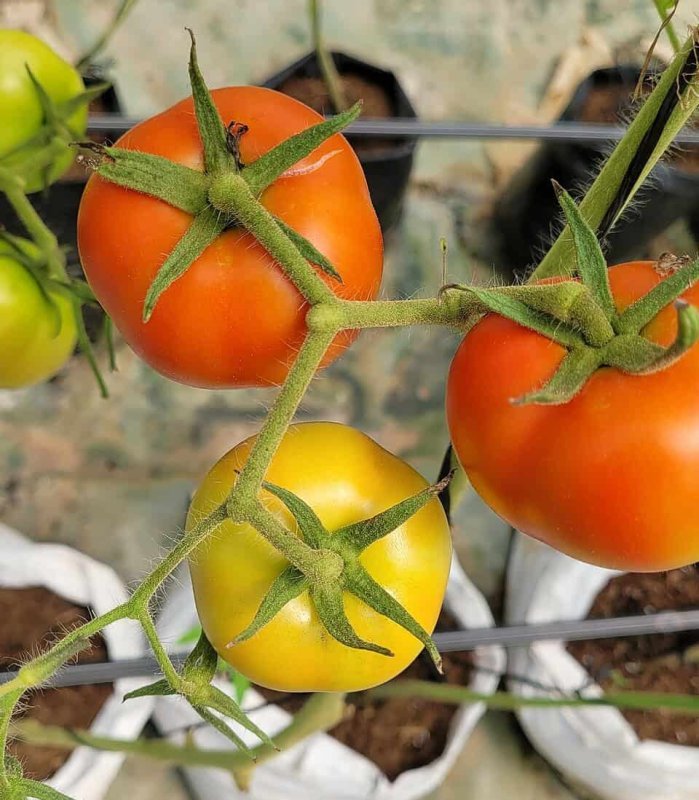
Tamarillo
Solanum betaceum
Description
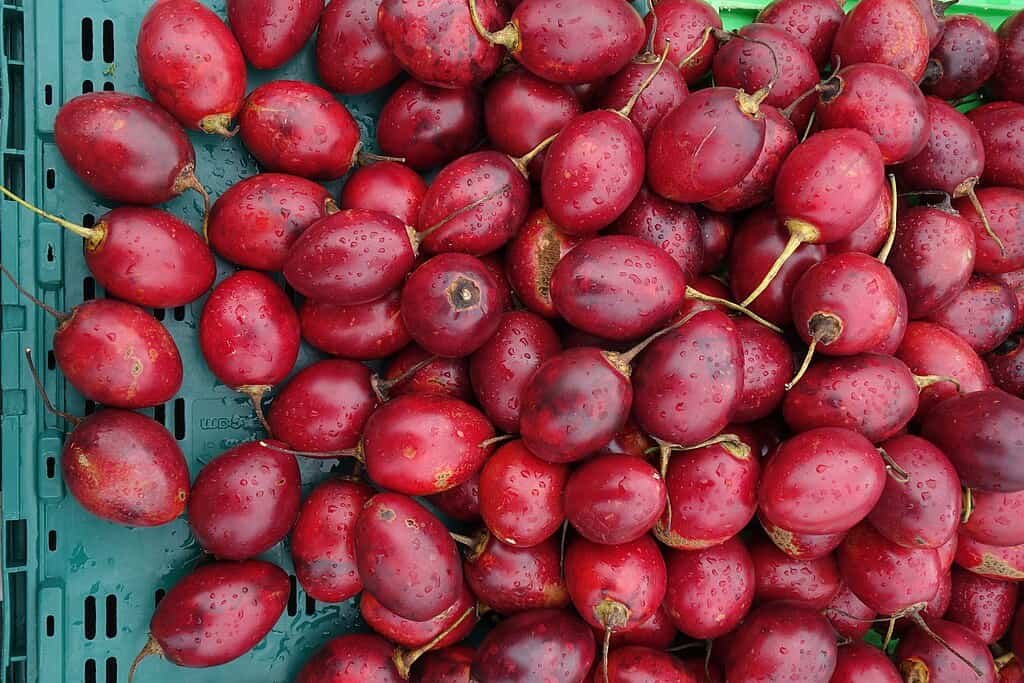
Egg-shaped fruit also known as "Tree Tomato". Flesh is tangy and tart, often eaten with a spoon or used in chutneys.
Benefits
Good source of Vitamins A, C, E, and iron. Supports vision and immune health.
History and Origins
Native to the Andes of Peru, Chile, Ecuador, and Bolivia. It was listed among the lost crops of the Incas. Today, it is commercially grown in New Zealand, which gave it the name "Tamarillo" to distinguish it from the common tomato.
Fun Facts
The skin is bitter and usually not eaten! The flavor is often described as a mix between tomato and passion fruit. It grows on a small tree that reaches peak production in just 4 years.
What are the varieties of Tamarillo?
Varieties: Red (most common, tart), Amber/Yellow (sweeter), and Gold (large and fleshy).
Nutritional Values per 100g of Tamarillo
| Calories | 31 kcal |
|---|---|
| Carbohydrates | 6 g |
| Protein | 2 g |
| Fat | 0.3 g |
| Fiber | 1.4 g |
| Vitamin C | 25 mg |
Harvest Months
Harvest months listed here correspond to the Southern Hemisphere.
Medical Disclaimer: The health benefits of this fruit are provided for educational purposes only and do not substitute for professional medical diagnosis or advice. Read more about our sources.