Persimmon
Diospyros kaki
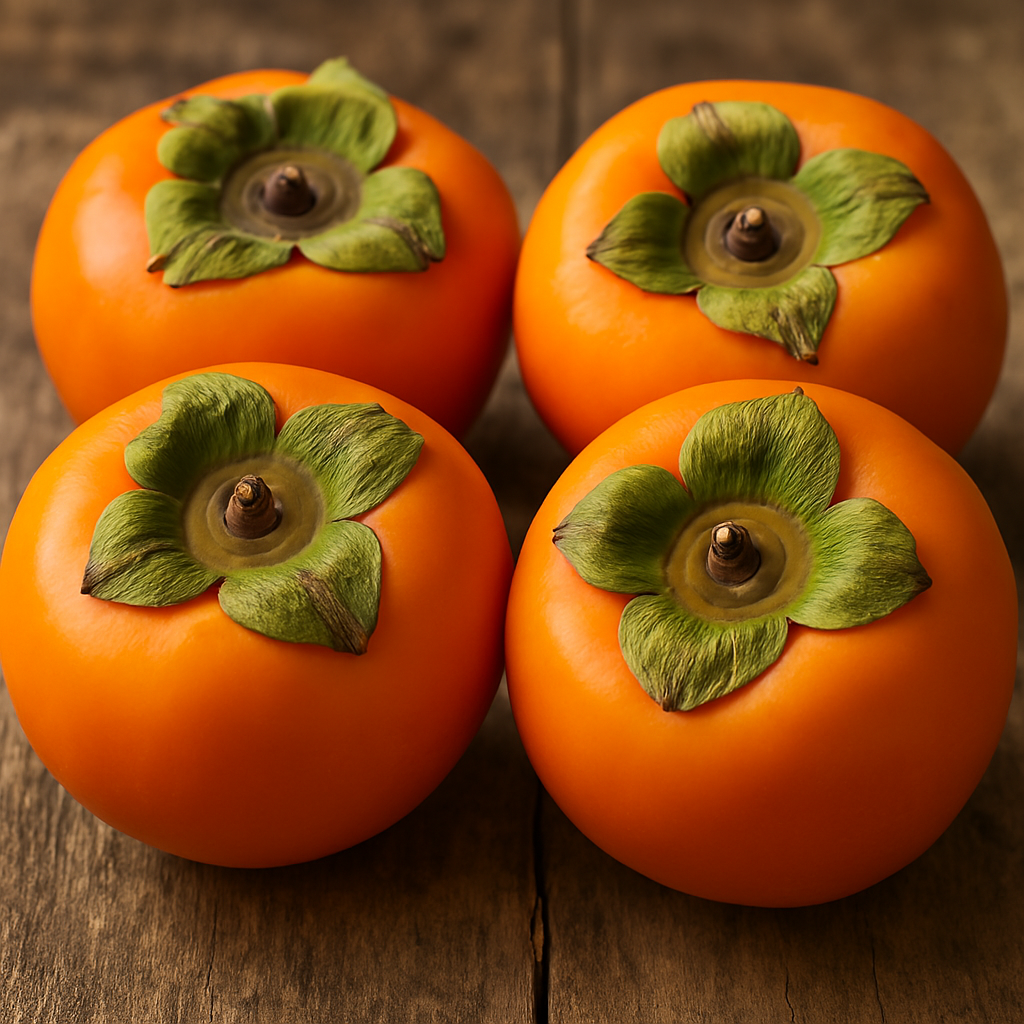
Description
Sweet fruit of Asian origin, with varieties like Fuyu. Consumed when ripe and soft, or crisp depending on the type.
Benefits
Rich in beta-carotene (Vitamin A precursor) and fiber. Improves eye and intestinal health.
History and Origins
The Persimmon originated in China, cultivated for over 2,000 years. It spread to Japan and Korea, becoming part of local culture, and arrived in Brazil in the early 20th century with Japanese immigrants. Today, it is widely appreciated.
Fun Facts
Some Persimmons only become sweet after fully ripening, while others (non-astringent) can be eaten crisp like apples. In Japan, dried persimmons (hoshigaki) are a traditional treat!
What are the varieties of Persimmon?
Common varieties: Rama Forte (sweet, popular in Brazil), Fuyu (crisp, non-astringent), Taubate (soft pulp), and Giombo (sweet and seedless).
Nutritional Values per 100g of Persimmon
| Calories | 127 kcal |
|---|---|
| Carbohydrates | 33.5 g |
| Protein | 0.8 g |
| Fat | 0.4 g |
| Fiber | 6 g |
| Vitamin C | 66 mg |
Harvest Months
Harvest months listed here correspond to the Southern Hemisphere.
Medical Disclaimer: The health benefits of this fruit are provided for educational purposes only and do not substitute for professional medical diagnosis or advice. Read more about our sources.