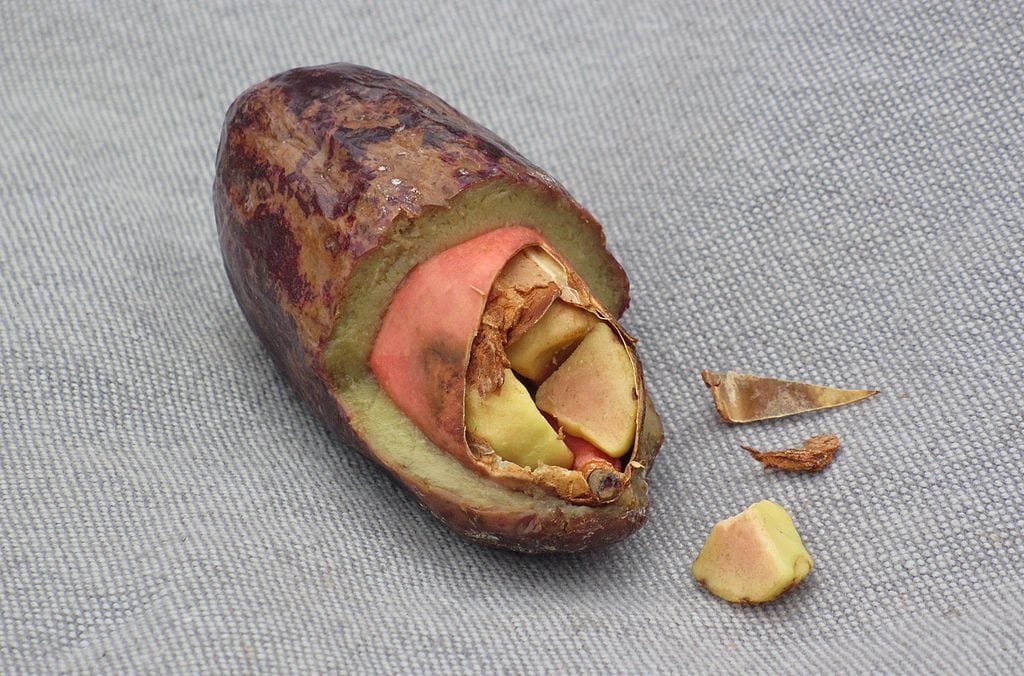
Pili Nut
Canarium ovatum
Description
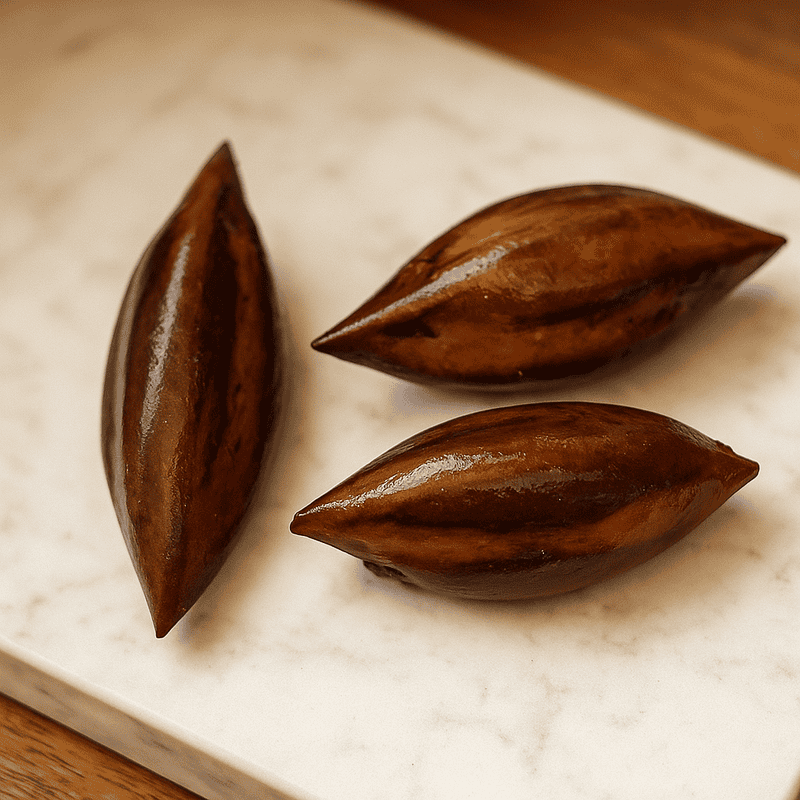
Tear-drop shaped nut with a extremely hard shell. The kernel is high in fat, tender, and tastes like a cross between pumpkin seed and macadamia.
Benefits
Complete protein containing all essential amino acids. Highest magnesium content of any nut. Rich in Vitamin E and healthy monounsaturated fats.
History and Origins
Pili is native to the Philippines, which is the only country producing it commercially on a large scale. It grows in volcanic soil, which contributes to its rich mineral profile.
Fun Facts
Pili is often marketed as the "perfect keto nut" due to its very high fat and low carb content. The hard shell makes it difficult to process, earning it a reputation as a premium nut.
What are the varieties of Pili Nut?
Classified by shell characteristics (hard vs. easy to crack) and kernel size.
Nutritional Values per 100g of Pili Nut
| Calories | 654 kcal |
|---|---|
| Carbohydrates | 8.4 g |
| Protein | 11.4 g |
| Fat | 71.1 g |
| Fiber | 2.7 g |
| Vitamin C | 0 mg |
Harvest Months
Harvest months listed here correspond to the Southern Hemisphere.
Medical Disclaimer: The health benefits of this fruit are provided for educational purposes only and do not substitute for professional medical diagnosis or advice. Read more about our sources.