Durian
Durio zibethinus
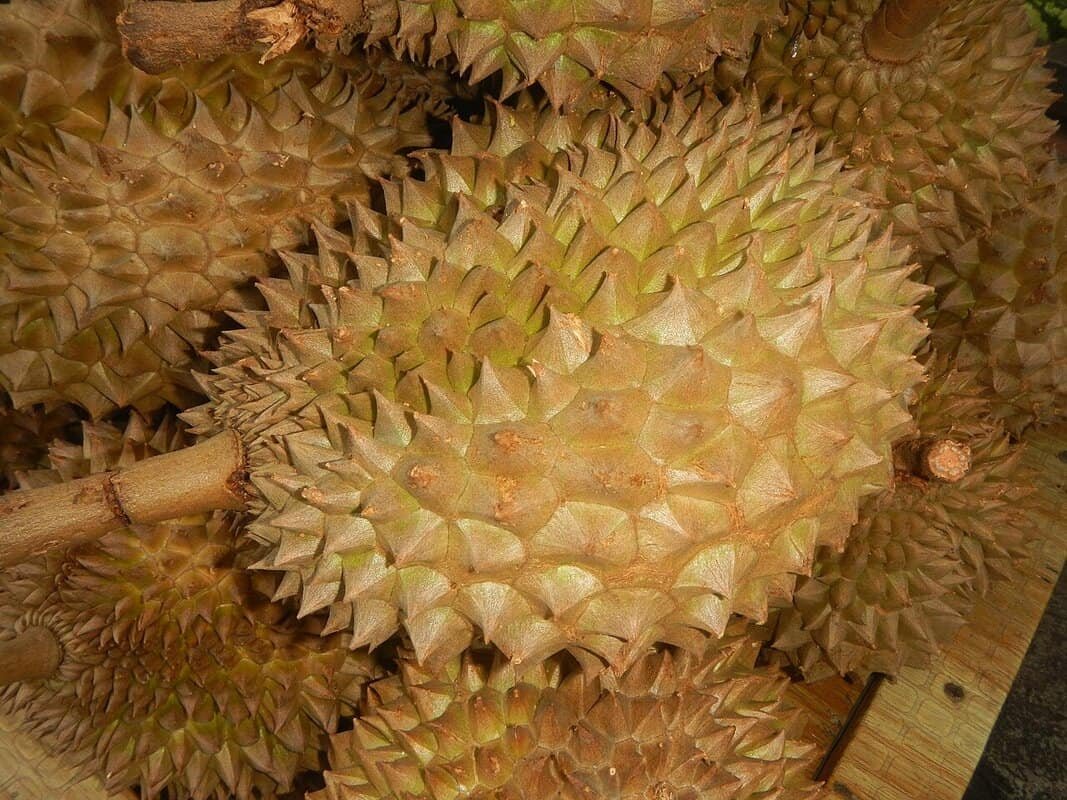
Description
Known as the "King of Fruits" in Southeast Asia. Creamy pulp with a strong, characteristic odor. Banned in public places in Singapore.
Benefits
Rich in tryptophan (serotonin precursor), potassium (436 mg/100g), and healthy fats. High energy value.
History and Origins
Called the "King of Fruits" in Southeast Asia, Durian has cultivation records dating back to the 7th century. 16th-century European explorers compared its smell to "rotten onions with dirty socks". In Thailand, it was a royal gift - eating it without permission was a crime punishable by death!
Fun Facts
It is FORBIDDEN to carry Durian on Singapore subways! Scientists have identified 50 sulfur compounds in its aroma. However, it is considered an aphrodisiac: a Malaysian saying goes "when the durians fall, the sarongs go up"!
What are the varieties of Durian?
Main types: Musang King (golden pulp), D24 Sultan (buttery flavor), Red Prawn (ruby color), and the rare Black Thorn (heart-shaped).
Nutritional Values per 100g of Durian
| Calories | 147 kcal |
|---|---|
| Carbohydrates | 27.1 g |
| Protein | 1.5 g |
| Fat | 5.3 g |
| Fiber | 3.8 g |
| Vitamin C | 19.7 mg |
Harvest Months
Harvest months listed here correspond to the Southern Hemisphere.
Medical Disclaimer: The health benefits of this fruit are provided for educational purposes only and do not substitute for professional medical diagnosis or advice. Read more about our sources.