Dragon Fruit
Hylocereus spp.
Description
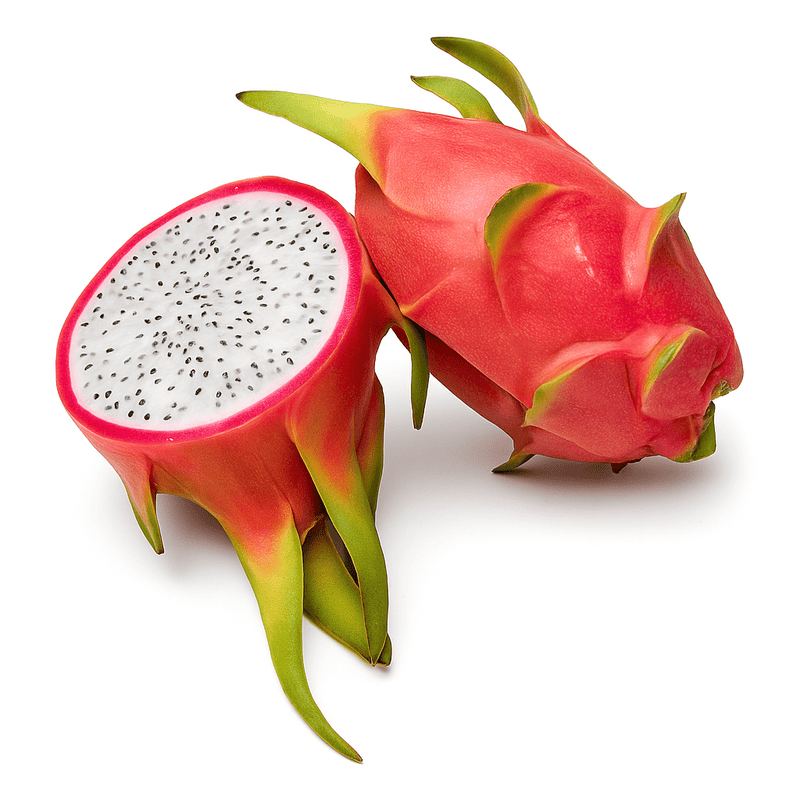
Fruit of an epiphytic cactus native to the Americas. Varieties include red skin with white flesh (most common), red skin with red flesh (sweeter), and yellow skin with white flesh. The texture resembles kiwi.
Benefits
Rich in antioxidants like betacyanins (in red types) and Vitamin C. High in fiber, aiding digestion. Seeds contain beneficial omega-3 fatty acids. Low calorie.
History and Origins
Dragon Fruit, or Pitaya, originated in Central America and Mexico. Cultivated by indigenous peoples, it gained international fame recently for its exotic look and refreshing taste.
Fun Facts
The Dragon Fruit cactus blooms only at night, and the flower lasts just one night! In Vietnam, the fruit is a symbol of prosperity. The red-fleshed variety contains betacyanin pigments.
What are the varieties of Dragon Fruit?
Varieties: White Pitaya (Hylocereus undatus), Red Pitaya (Hylocereus costaricensis), Yellow Pitaya (Selenicereus megalanthus), and ornamental hybrids.
Nutritional Values per 100g of Dragon Fruit
| Calories | 60 kcal |
|---|---|
| Carbohydrates | 13 g |
| Protein | 1.2 g |
| Fat | 0.4 g |
| Fiber | 3 g |
| Vitamin C | 9 mg |
Harvest Months
Harvest months listed here correspond to the Southern Hemisphere.
Medical Disclaimer: The health benefits of this fruit are provided for educational purposes only and do not substitute for professional medical diagnosis or advice. Read more about our sources.