Passion Fruit
Passiflora edulis
Description
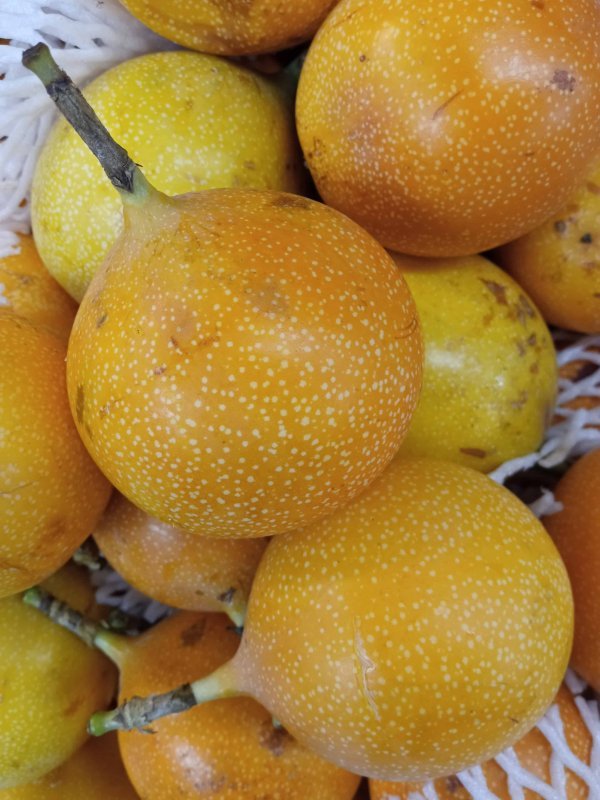
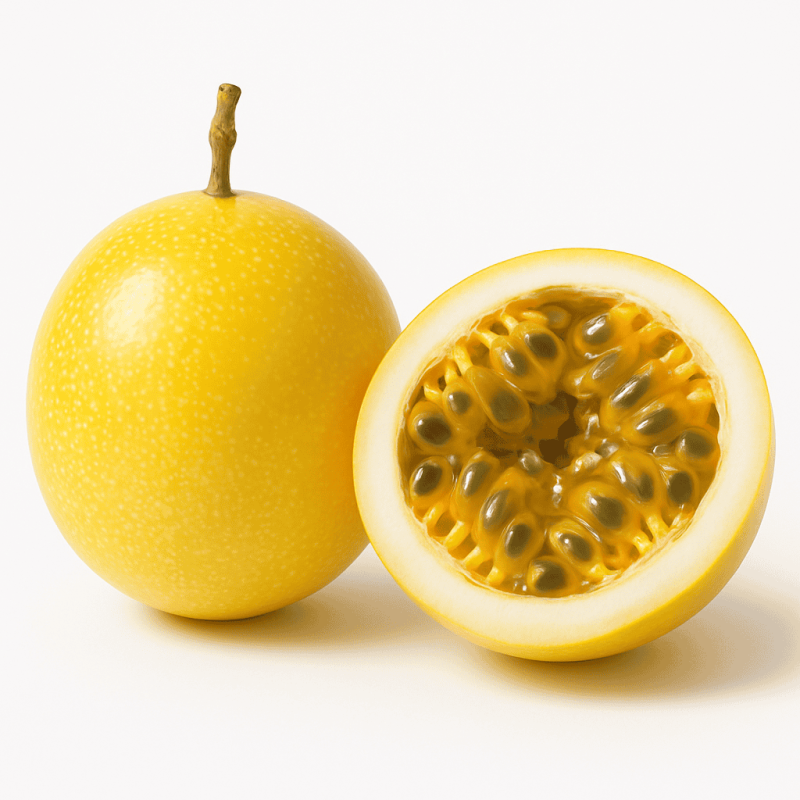
Tropical vine fruit with a hard yellow or purple shell containing aromatic seeds and pulp. Famous for its intense, tart flavor and calming properties.
Benefits
Rich in Vitamin C, fiber, and Vitamin A. Contains alkaloids with mild sedative properties, helping with anxiety and insomnia.
History and Origins
Native to Brazil, Paraguay, and Argentina. The flower was named "Passion Flower" by missionaries who saw symbols of the Crucifixion of Christ in its anatomy. Brazil is the world's largest producer and consumer.
Fun Facts
A wrinkly passion fruit is not bad—it's actually sweeter! In Brazil, "Maracujina" is slang for a calm person, because the fruit is a natural sedative. The "Passion Fruit Mousse" is a national dessert.
What are the varieties of Passion Fruit?
Varieties: Yellow Passion Fruit (sour, large), Purple Passion Fruit (sweeter, smaller), and Sweet Passion Fruit (eaten like an apple).
Nutritional Values per 100g of Passion Fruit
| Calories | 97 kcal |
|---|---|
| Carbohydrates | 23 g |
| Protein | 2.2 g |
| Fat | 0.4 g |
| Fiber | 10.4 g |
| Vitamin C | 30 mg |
Harvest Months
Harvest months listed here correspond to the Southern Hemisphere.
Medical Disclaimer: The health benefits of this fruit are provided for educational purposes only and do not substitute for professional medical diagnosis or advice. Read more about our sources.