Mangaba
Hancornia speciosa
Description
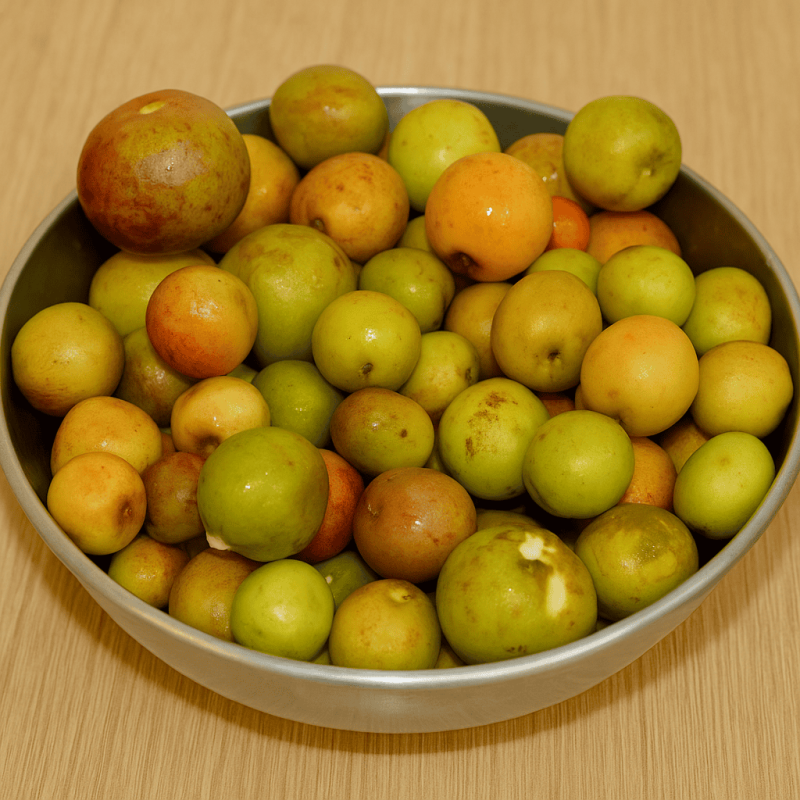
Mangaba (Hancornia speciosa) is a typical Brazilian fruit with a rounded or slightly oval shape, measuring about 2.5 to 6 centimeters in diameter. Its smooth skin ranges in color from green to yellow-orange, often showing distinctive reddish spots when ripe. The pulp is white, creamy, juicy, and slightly viscous, with a unique sweet-and-tart flavor that combines mild sweetness with gentle acidity.
The name “mangaba” comes from Tupi-Guarani and literally means “good thing to eat,” a name that reflects the affection this fruit inspires. Its aroma is delicate, and the texture of the pulp is often described as a mix between peach and avocado. Inside the fruit are 2 to 30 flat brown seeds, embedded in the edible pulp.
The mangaba tree is a medium-sized tree that can grow between 4 and 15 meters tall. It has a twisted trunk, rough reddish bark, and a rounded canopy that provides good shade. A striking feature of the species is the production of a white latex, popularly known in Brazil as “mangaba milk.”
Benefits
Mangaba is considered a highly nutritious fruit and is valued for its potential health benefits:
Immune support: Mangaba is rich in vitamin C, which helps support the immune system and contributes to the production of white blood cells.
Iron intake: Its iron content, together with vitamin C, may help support iron absorption and make the fruit a useful part of a balanced diet.
Heart health: The fruit contains antioxidants, potassium, and fiber, which are associated with cardiovascular well-being.
Blood sugar balance: Its fiber content may help slow sugar absorption and support healthy blood glucose levels.
Digestive health: Because it is rich in fiber, mangaba can help support regular bowel function and gut health.
Antioxidant properties: Mangaba contains flavonoids, carotenoids, and other bioactive compounds that help protect cells from oxidative stress.
Medicinal Uses
The medicinal use of the mangaba tree is recognized in Brazilian folk medicine:
Latex (“mangaba milk”):
- Used traditionally for ulcers and herpes.
- Used in folk practices against tuberculosis.
- Applied to help heal wounds and skin conditions.
- Used for warts.
Tea made from leaves and bark:
- Used traditionally for high blood pressure.
- Used to help lower cholesterol.
- Used as a folk remedy for diabetes.
- Used to relieve menstrual cramps.
- Used to stimulate liver function.
History and Origins
Mangaba is native to Brazil, and records show that Indigenous peoples used it long before European arrival. The earliest written account of the fruit dates back to the 16th century, when the Jesuit priest Brás Lourenço described eating wild fruits called mangabas in southern Bahia in a letter from 1554.
During the colonial period, mangaba won over European tastes. Dutch travelers reportedly considered it, alongside pineapple, one of the finest fruits in the country. In Pernambuco, it became part of refined household cuisine and was mentioned in Doceira Brasileira, a cookbook by D. Constança Olívia de Lima, published in 1856.
In the 20th century, especially during World War II, mangaba latex gained strategic economic importance because it was used in rubber production. This period marked a phase of more intense exploitation of the species in several parts of Brazil.
Fun Facts
- The term “mangaba” also names several watercourses in Brazil, showing its cultural and geographic importance.
- During World War II, mangaba latex was strategically important for rubber production, and some families were even able to buy trucks with the income earned from extraction.
- The fruit should only be eaten when fully ripe, as it may be toxic when green.
- The mangaba tree is extremely hardy and adapts well to poor, sandy soils where many other fruit trees do not thrive.
- A single tree can produce from 1 to 800 fruits per harvest.
Growing and Harvest Season
The mangaba tree adapts very well to tropical and subtropical climates, preferring temperatures between 24°C and 26°C. It is a hardy species that tolerates poor, sandy, and acidic soils, which makes it well suited to the Cerrado and Caatinga regions.
Propagation: It is carried out mainly by seeds, which should be thoroughly washed to remove all pulp, since the pulp inhibits germination. Germination occurs in 15 to 40 days, with a success rate of 80–90%.
Planting: The recommended spacing is 6x6 meters between plants. Mangaba trees can be intercropped with short-cycle crops such as corn, beans, watermelon, and cassava.
Start of Production: Fruiting begins between the 3rd and 5th year after planting, reaching full production at 5 years.
What are the varieties of Mangaba?
Varieties: Cerrado mangaba (the most common), forest mangaba (larger and juicier), and regional hybrids.
Nutritional Values per 100g of Mangaba
| Calories | 58 kcal |
|---|---|
| Carbohydrates | 14 g |
| Protein | 0.6 g |
| Fat | 0.2 g |
| Fiber | 2.3 g |
| Vitamin C | 46 mg |
Harvest Months
Harvest months listed here correspond to the Southern Hemisphere.
Medical Disclaimer: The health benefits of this fruit are provided for educational purposes only and do not substitute for professional medical diagnosis or advice. Read more about our sources.