Burseraceae
The Burseraceae family brings together tropical trees and shrubs known for producing aromatic resins, as well as a few edible fruits used in local cuisines. This botanical family is important because it combines ecological value, traditional uses, and, in some cases, food‑producing species in warm, often dry, tropical areas.
Overview
Burseraceae is a group of flowering plants formed by trees and shrubs, many of which release a perfumed resin when the bark or branches are cut. These resins are historically used in incense, perfumes, and traditional practices, which gives the family a special cultural role.
On Frutopedia, this family is relevant because, beyond the resin, certain species produce fruits that people eat or use in regional recipes. In short, Burseraceae is a group where the value of the plant goes beyond the fruit, but the fruits still deserve attention.
Botanical features
Plants in the Burseraceae family usually have alternate, often compound leaves, and a stem or branches that emit an aromatic resin when injured. The leaves are typically grouped toward the tips of the branches, giving the plant a distinctive look.
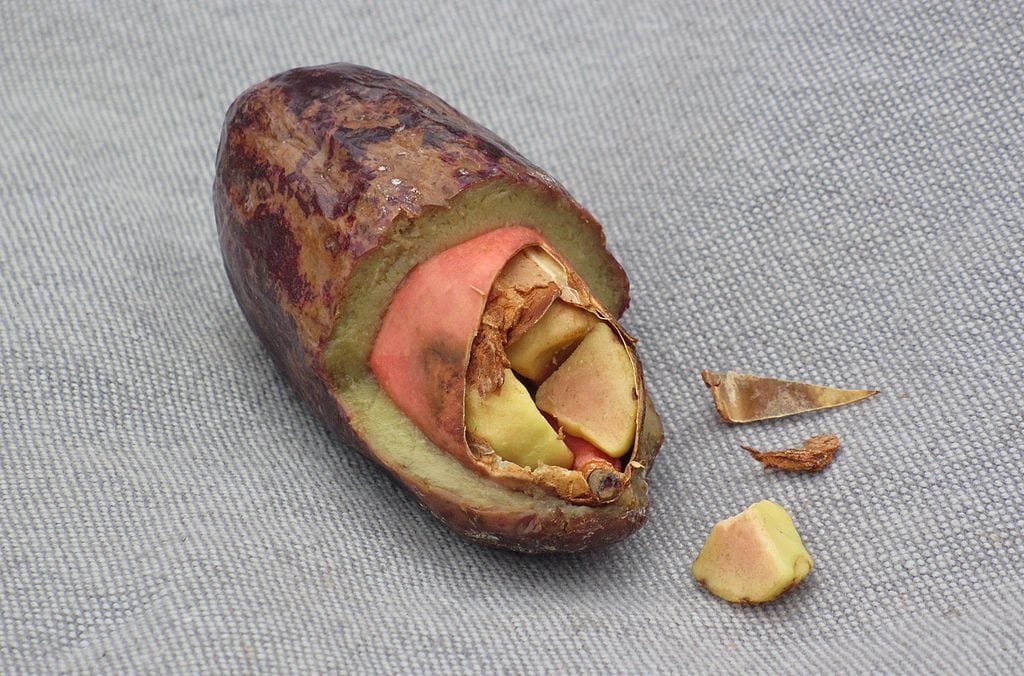
The fruits are commonly drupes, with a hard inner part enclosing the seed, similar in structure to some familiar fruits. This kind of fruit is adapted to animal dispersal, especially by birds and other wildlife, which helps spread the seeds in natural habitats.
Origin and distribution
Burseraceae species are mostly found in tropical regions, with diversity in tropical America, Africa, and parts of Asia. Many grow well in drier or seasonally dry areas, such as tropical dry forests and open woodland formations.
In Brazil, the family appears in several biomes, including the Amazon, Caatinga, Cerrado, and Atlantic Forest. This wide distribution shows how adaptable this botanical family is across different warm ecosystems.
Representative fruits
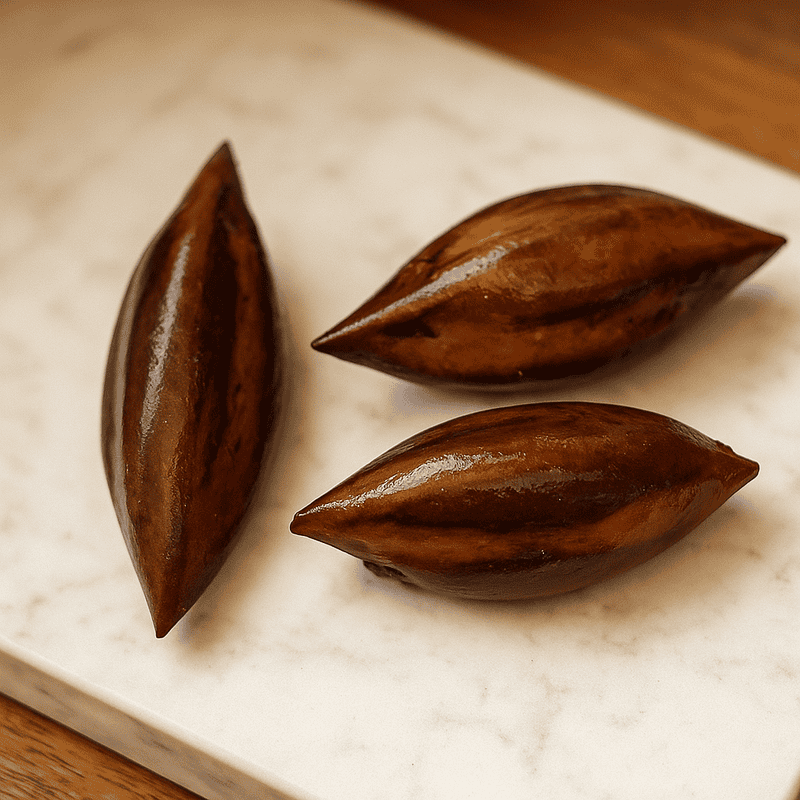
Among the better‑known fruits from Burseraceae are some wild and semi‑wild species in the genera **Protium** and **Dacryodes**, which are used locally in traditional diets. In other tropical regions, the genus **Canarium** includes species whose fruits are eaten or used in traditional products.
The full list of fruits from this family on Frutopedia appears in the bottom section of the page, where each fruit is shown in a card with a quick link to its own details.
Interesting facts
One remarkable feature of Burseraceae is the production of aromatic resins, such as frankincense and myrrh, which have long‑standing roles in religious ceremonies, perfumery, and traditional medicine. This makes the family valuable far beyond food use.
Another interesting point is that many species have bark that peels off in thin layers or plates, which helps in identification. Often, the scent of the resin is the easiest clue that you are looking at a plant from this family.
Frequently asked questions
1. What is the Burseraceae family?
It is a botanical family of tropical trees and shrubs, known for aromatic resins and some edible fruits.
2. Do all plants in this family produce edible fruits?
No. Some species are better known for their resin, while others have fruits used mainly in local or regional contexts.
3. Is Burseraceae present in Brazil?
Yes. The family can be found in several Brazilian biomes, especially in tropical and dry regions.
4. What are the main uses of this family’s resins?
They are used in incense, perfumes, traditional medicine, and cultural practices in many parts of the world.